What you need to know about this invasive pest
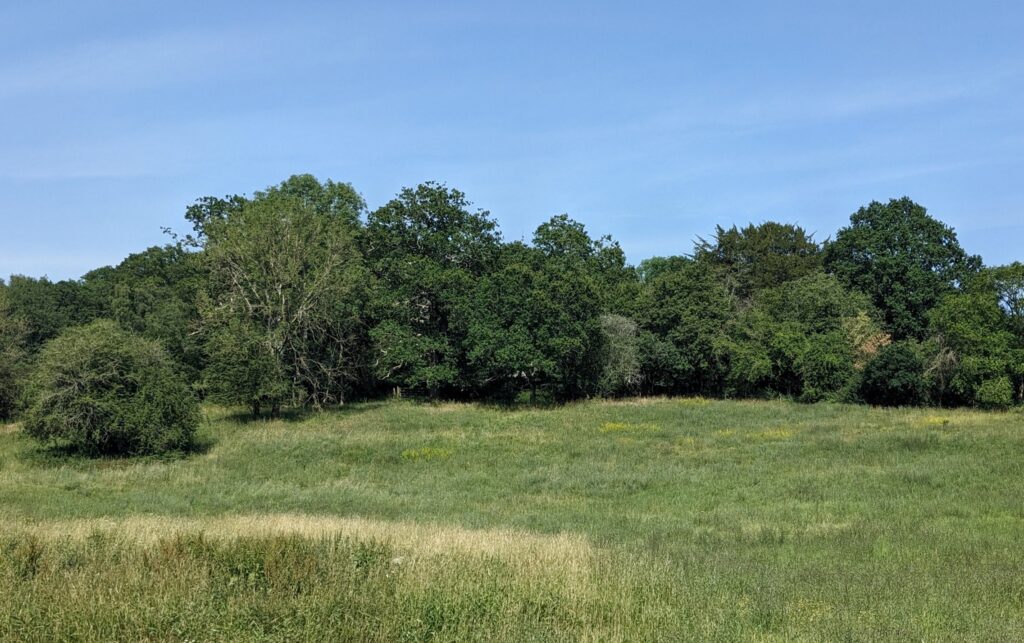
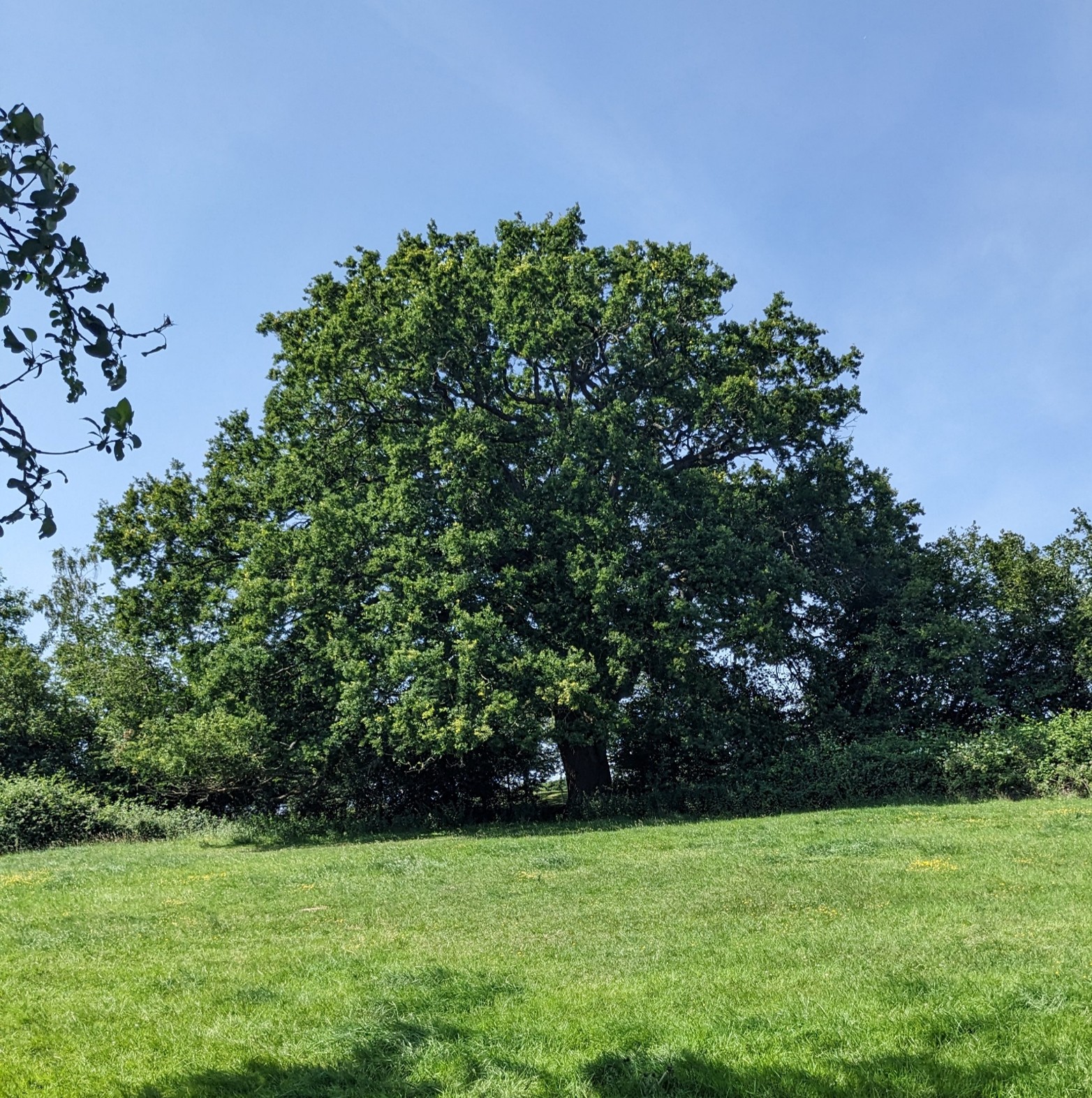
Whether in woods or hedgerows or out in the open meadows, oak trees are very much a part of the Hedgerley landscape. As well as providing a picturesque back drop, oak trees provide a haven for literally thousands of different species of flora and fauna, a veritable microcosm of biodiversity!
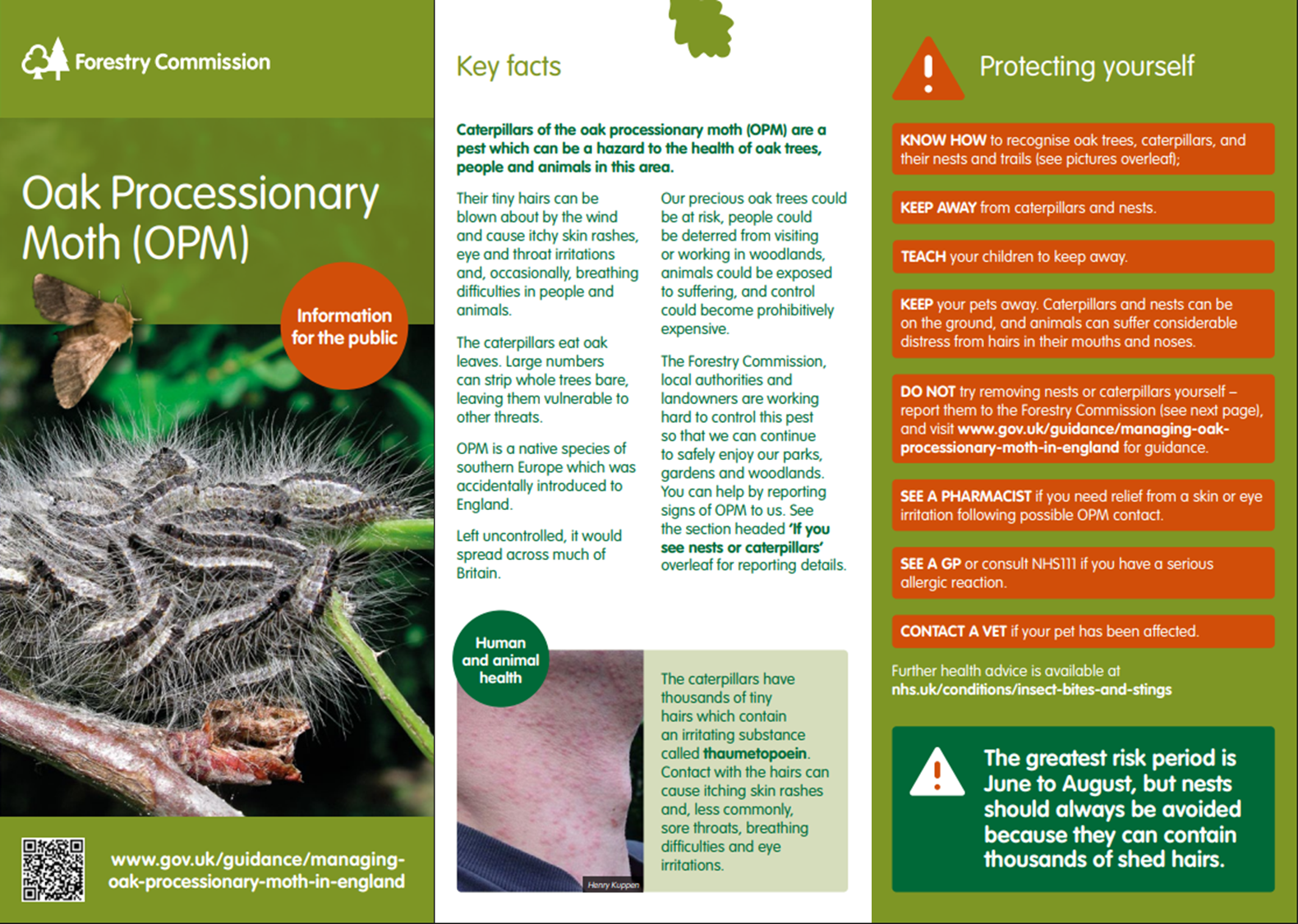
Oak processionary moth (OPM) is an Invasive Non Native Species (INNS) that was inadvertently introduced in London and is now established in the South East of England. The OPM caterpillars are a pest and a hazard to the health of oak trees, people and animals including pets.
OPM has been recorded as close as Farnham Common and Stoke Poges, and nests have been found recently in Black Park. So we need to keep vigilant and report all sightings so that action can be taken to mitigate the impact these caterpillars could have.
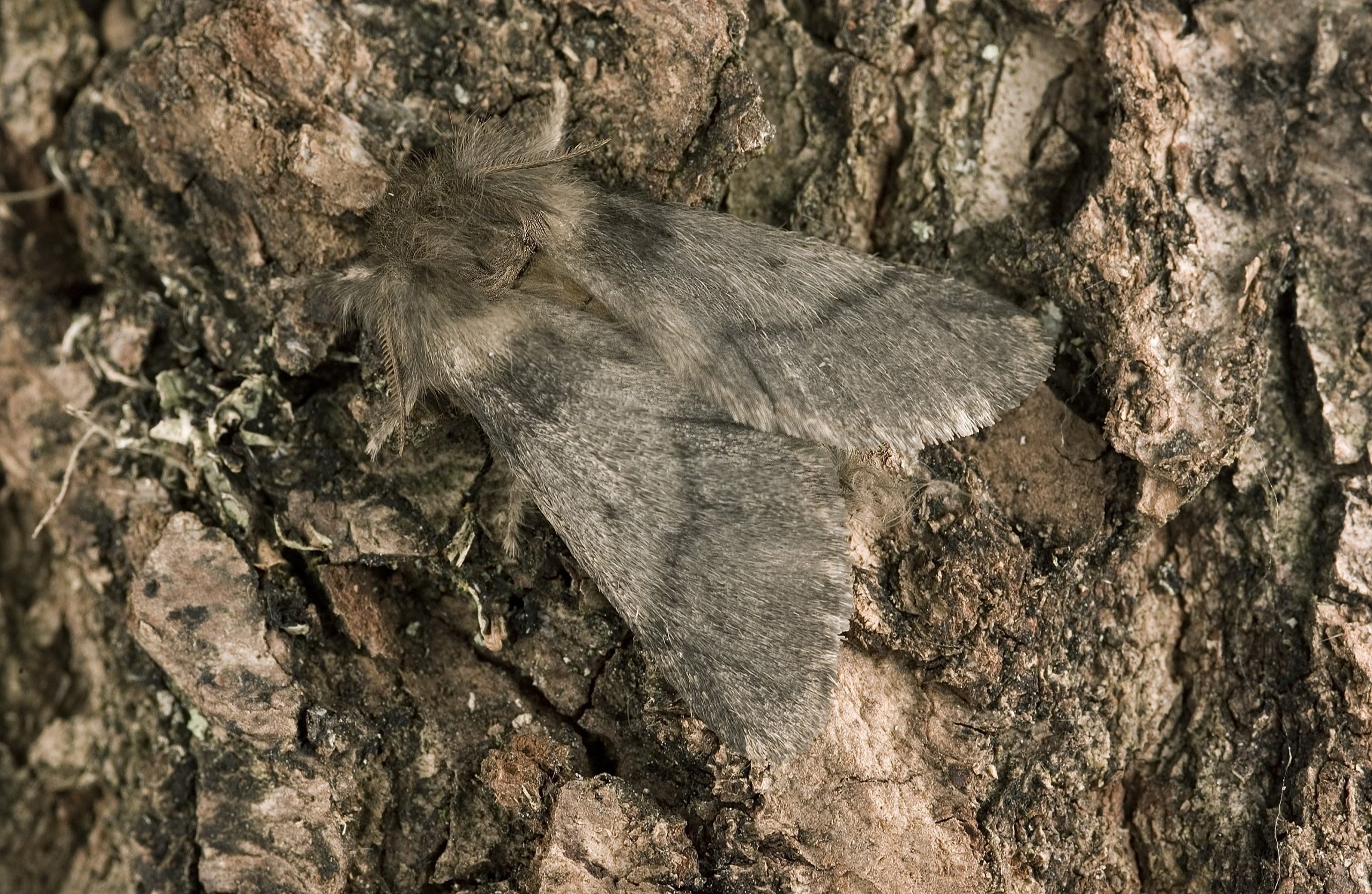
Adult oak processionary moth.
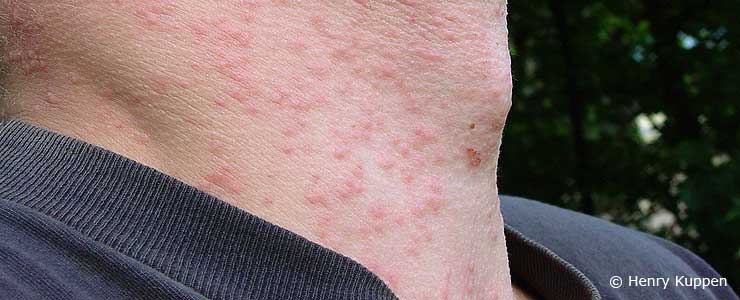
The caterpillars have tiny filament hairs that can blow around in the wind and cause skin rashes, throat irritations and potentially respiratory issues in people and animals.
The caterpillar hairs contain an irritating substance that can cause skin rashes, as seen here.
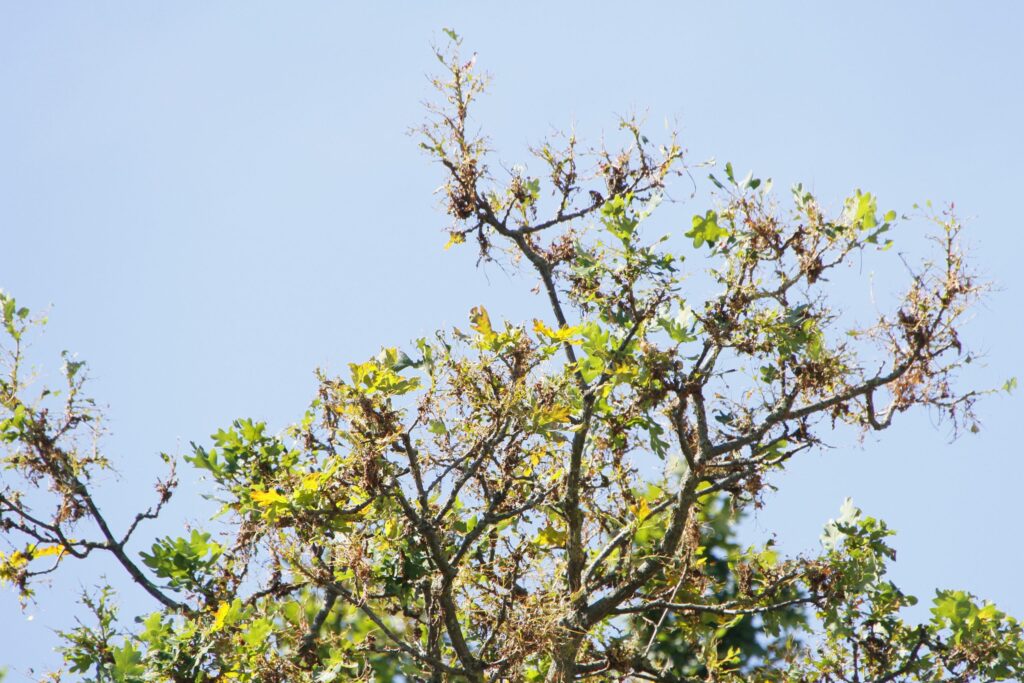
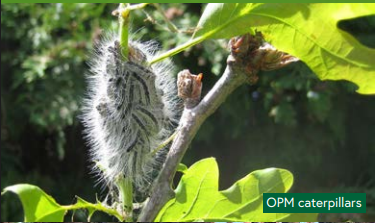
OPM caterpillars live almost exclusively in oak trees – they are only seen on other trees if there are no more oak trees to feed upon. The caterpillars feed on the oak leaves and leave the trees defoliated. Bare oak trees are then vulnerable to disease and drought.
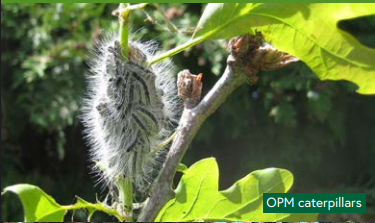
The caterpillars move in processions, nose-to-tail, on oak trees or on the ground
(hence the name).
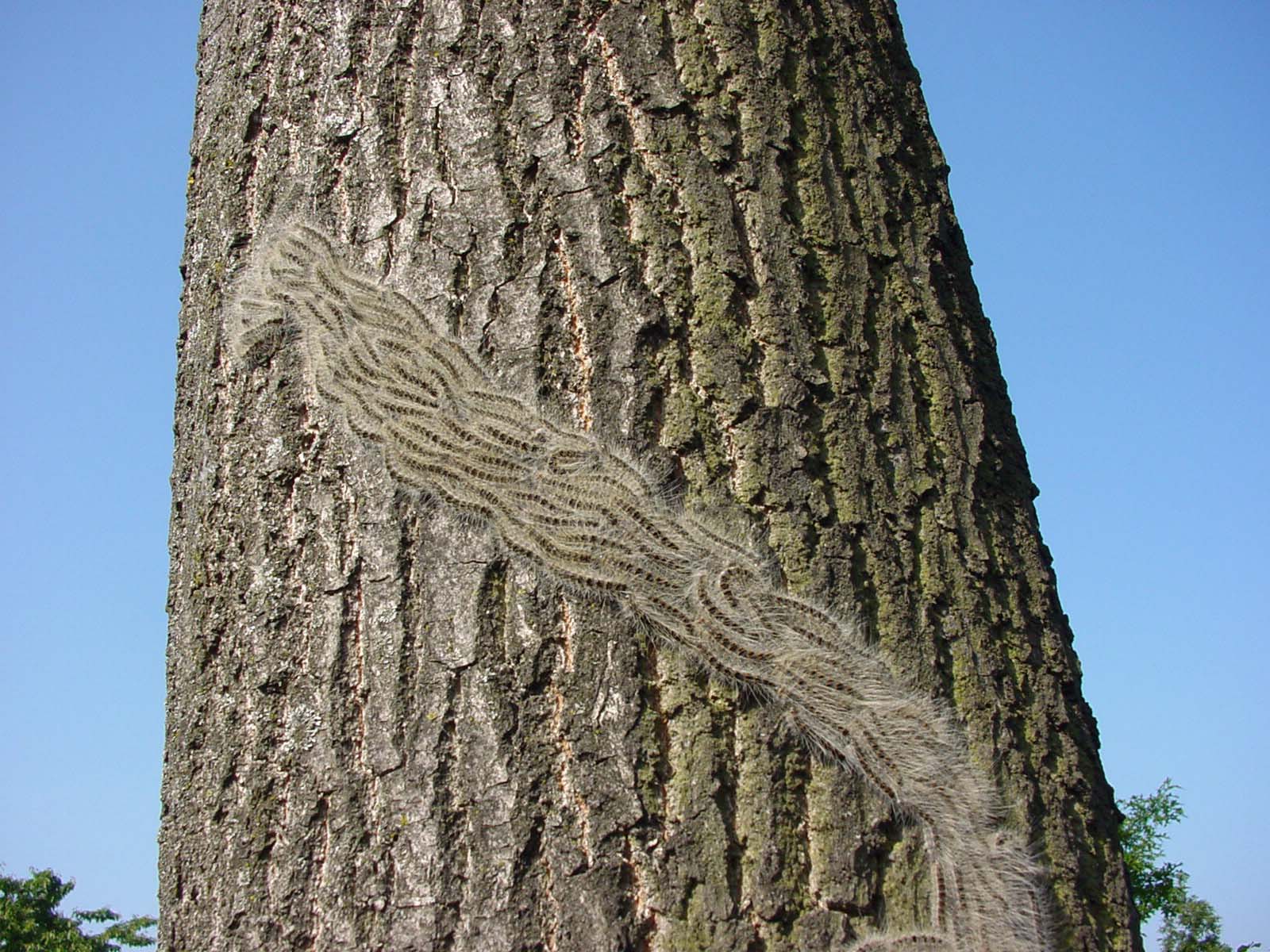
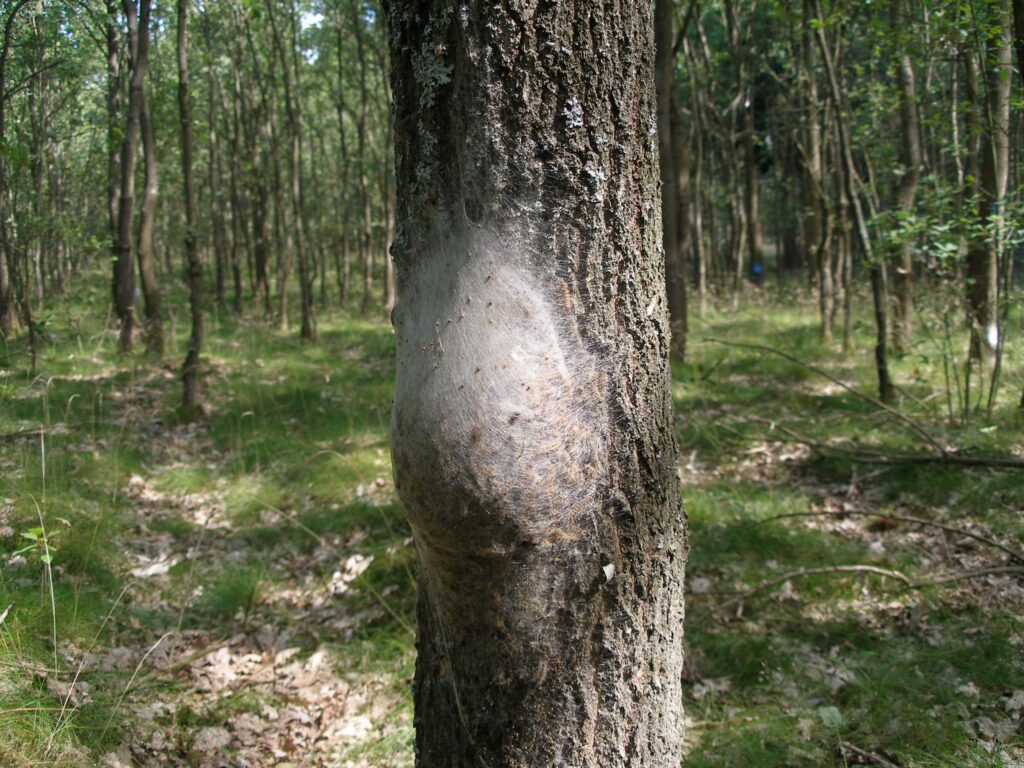
They build white silken nests on tree trunks and branches (but not on leaves).
What to do if you see OPM caterpillars or nests:
Follow the Forestry Commission advice.
Report all sightings to the Forestry Commission and/or notify Hedgerley Nature Hub using our Contact form.
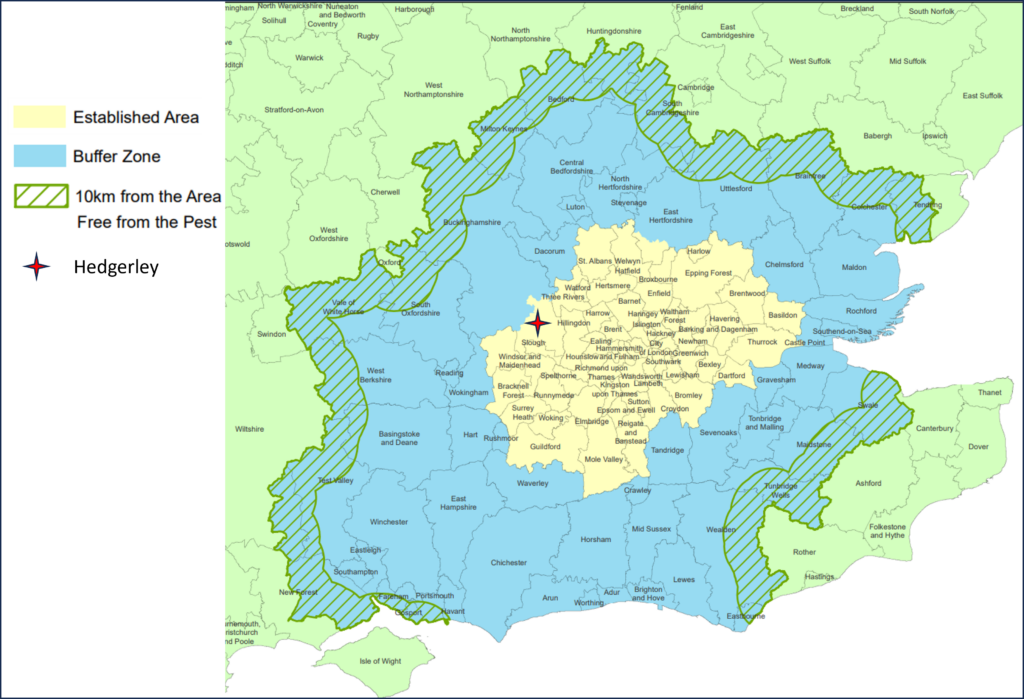
There are currently three geographically-distinct OPM management zones.
Hedgerley is in the OPM ‘Established Area’
Established area
This is the area where OPM is established in the South East of England.
Buffer Zone
In this area there is an annual OPM programme of surveillance and control, led by the Forestry Commission.
Area free from the pest
This area is officially designated free from the pest and covers other parts of the UK.
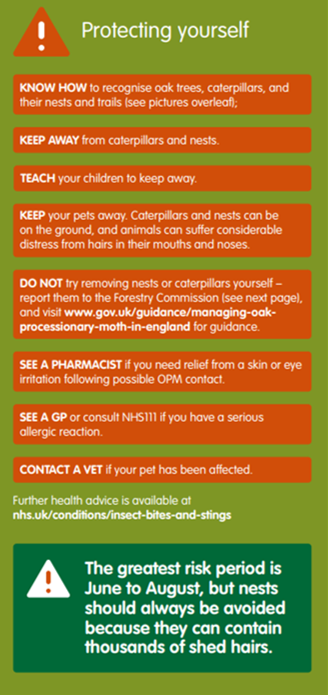
- Remain vigilant.
- Keep away from OPM caterpillars and their nests.
- Report sightings.
- Together we can keep safe and preserve our wonderful oak trees.